
How to Use Word Prediction on Any Website or Google Docs
Learn how to use Helperbird's Word Prediction feature to get word suggestions as you type. Word prediction helps you write faster and spell words correctly.
·
- features
- writing
What is Word Prediction?
Word Prediction suggests words as you type. When you start typing a word, Helperbird shows you a list of words that you might be trying to write. You can click on a suggestion to insert it instead of typing the whole word.
This helps you write faster and also helps with spelling, since you can see the correct spelling before you finish typing.
Who is This For?
This feature is helpful for:
- People with dyslexia who struggle with spelling
- Anyone who wants to type faster
- People with motor difficulties who want to reduce keystrokes
- Students writing essays or assignments
- Anyone learning to spell in a new language
Step 1: Open Helperbird
Click the Helperbird icon in your browser toolbar. It looks like a small owl and is usually in the top-right corner of your browser.
This will open the Helperbird menu.
Step 2: Go to the All Features Section
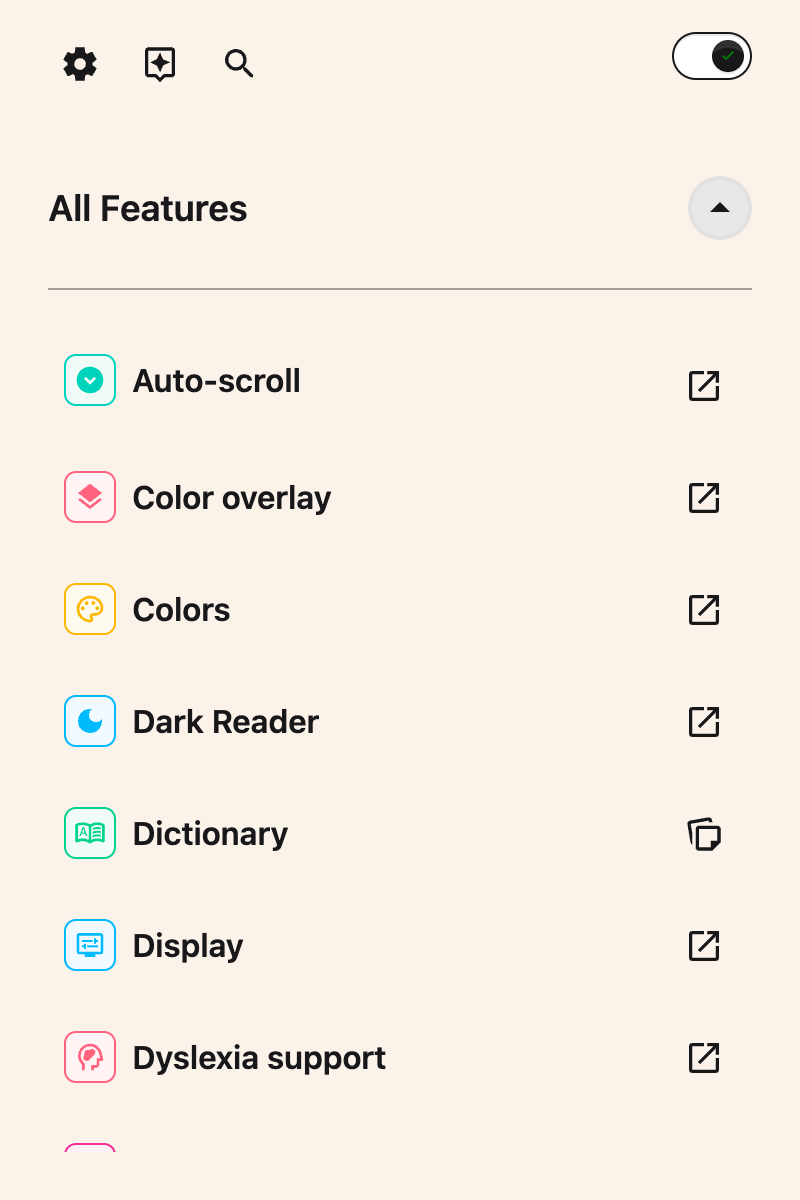
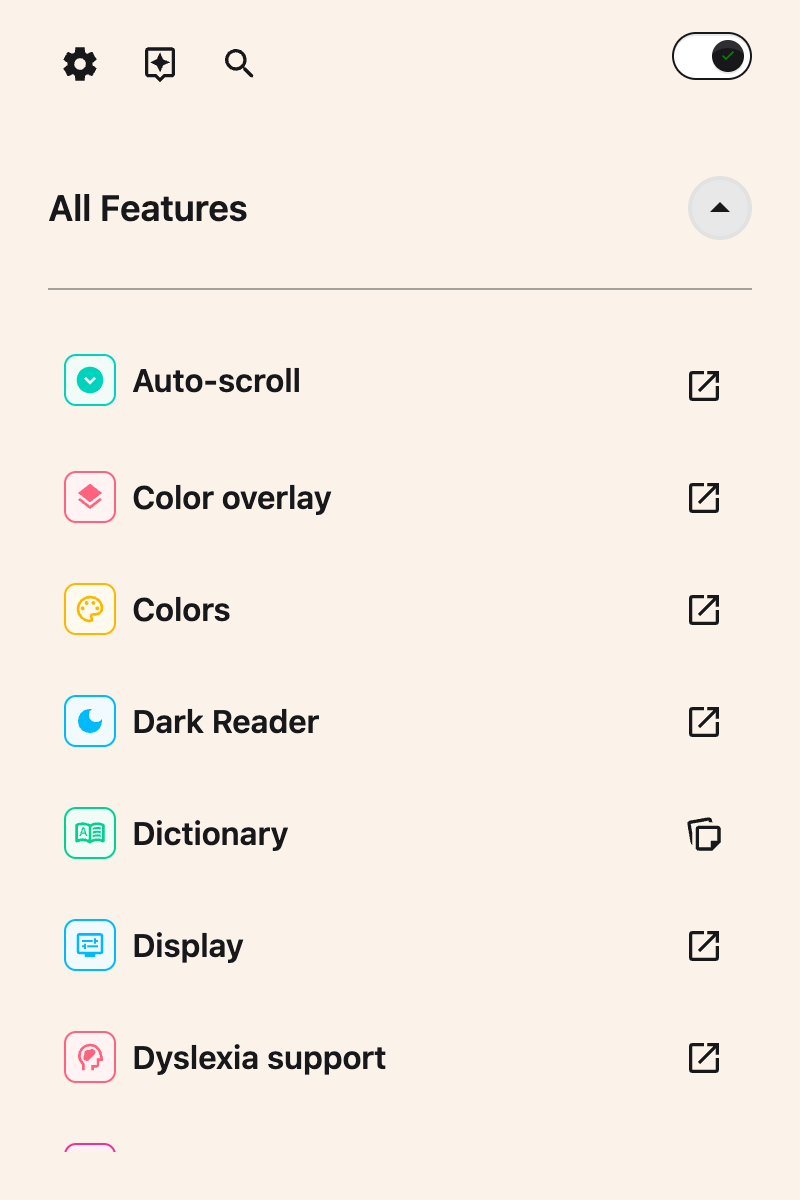
Scroll down to the bottom of the Helperbird menu. You will see a section called All Features.
Click the arrow next to All Features to expand it and show all available features.
Step 3: Find Word Prediction
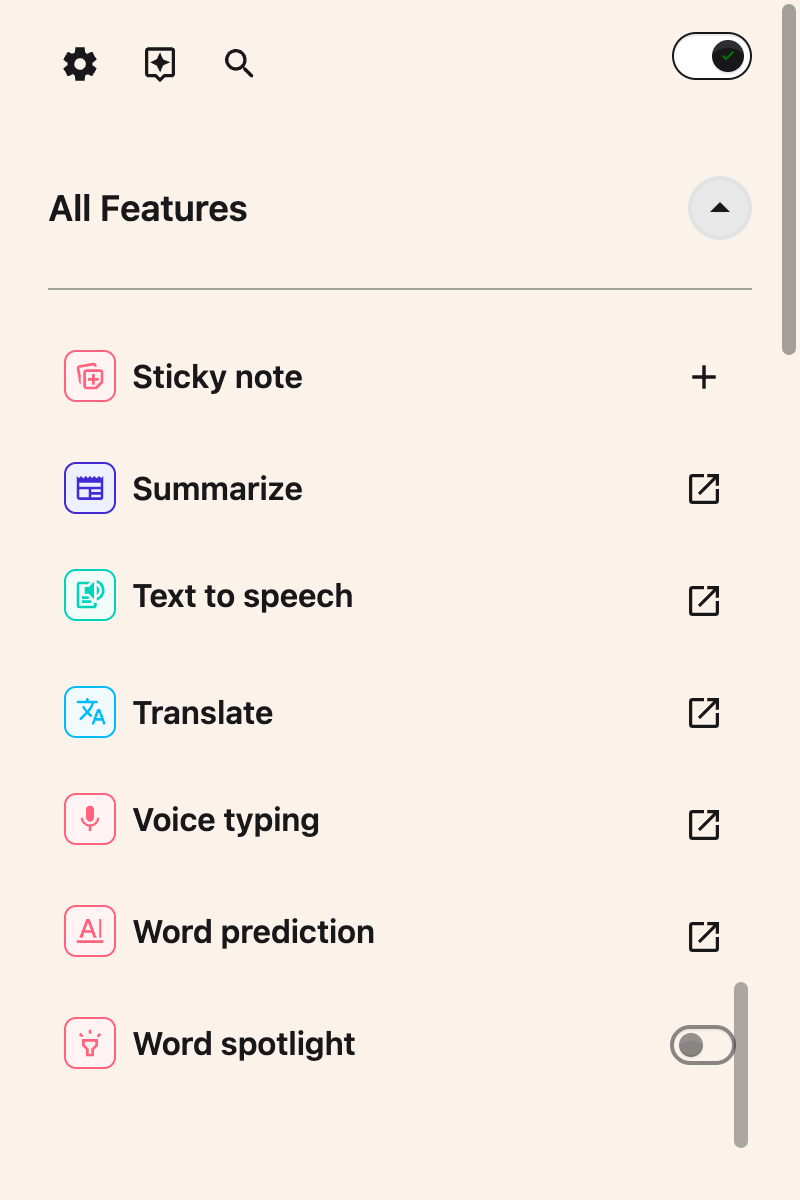
Look through the list of features until you see Word prediction.
Step 4: Open Word Prediction
Click Open on the Word prediction row to open its panel.
Step 5: Turn on Word Prediction
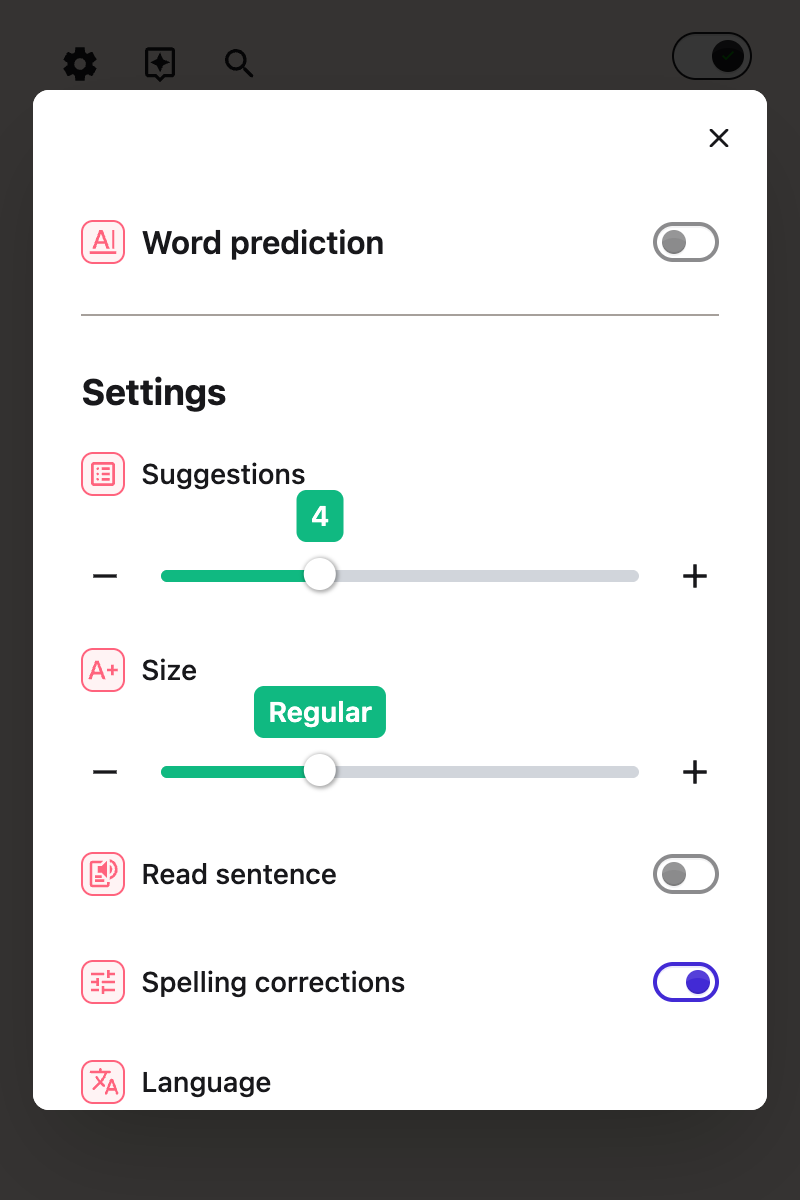
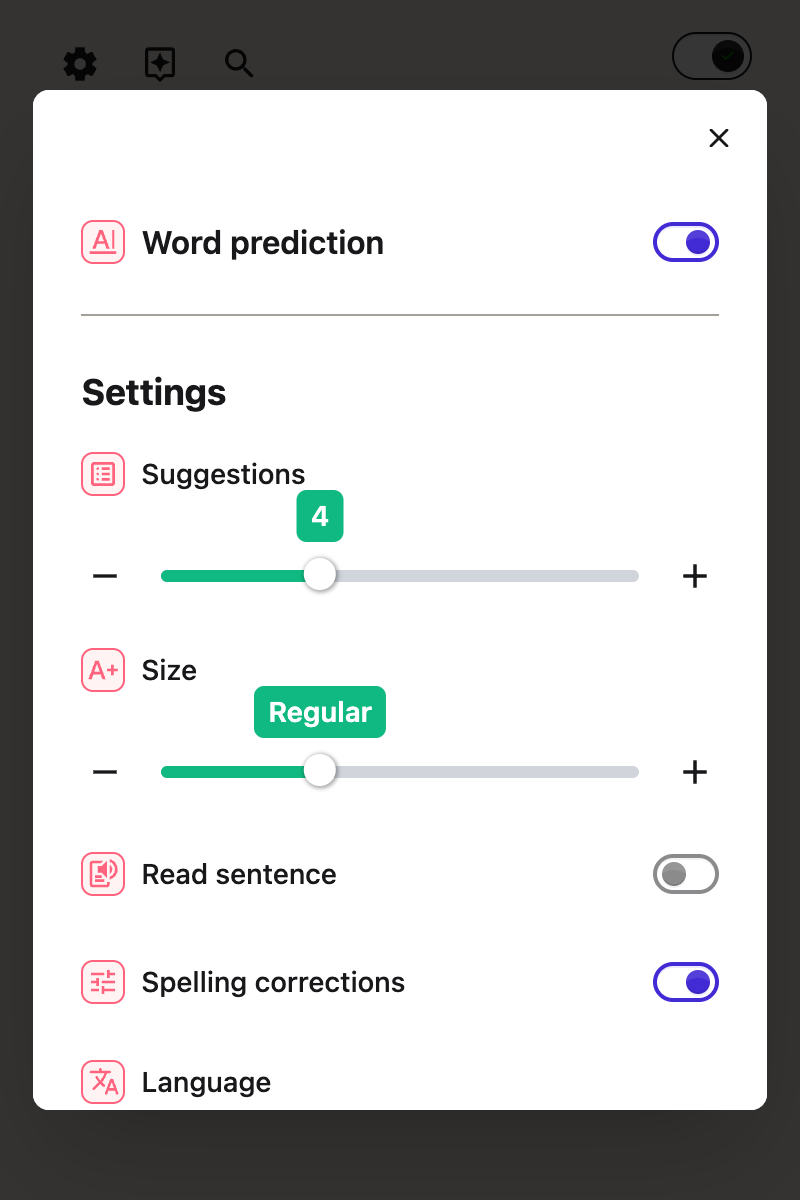
In the Word Prediction panel, you will see a toggle switch at the top.
Click the toggle switch to turn Word Prediction on. The toggle will turn purple when it is enabled.
Step 6: Adjust Settings
You can customize Word Prediction with these options:
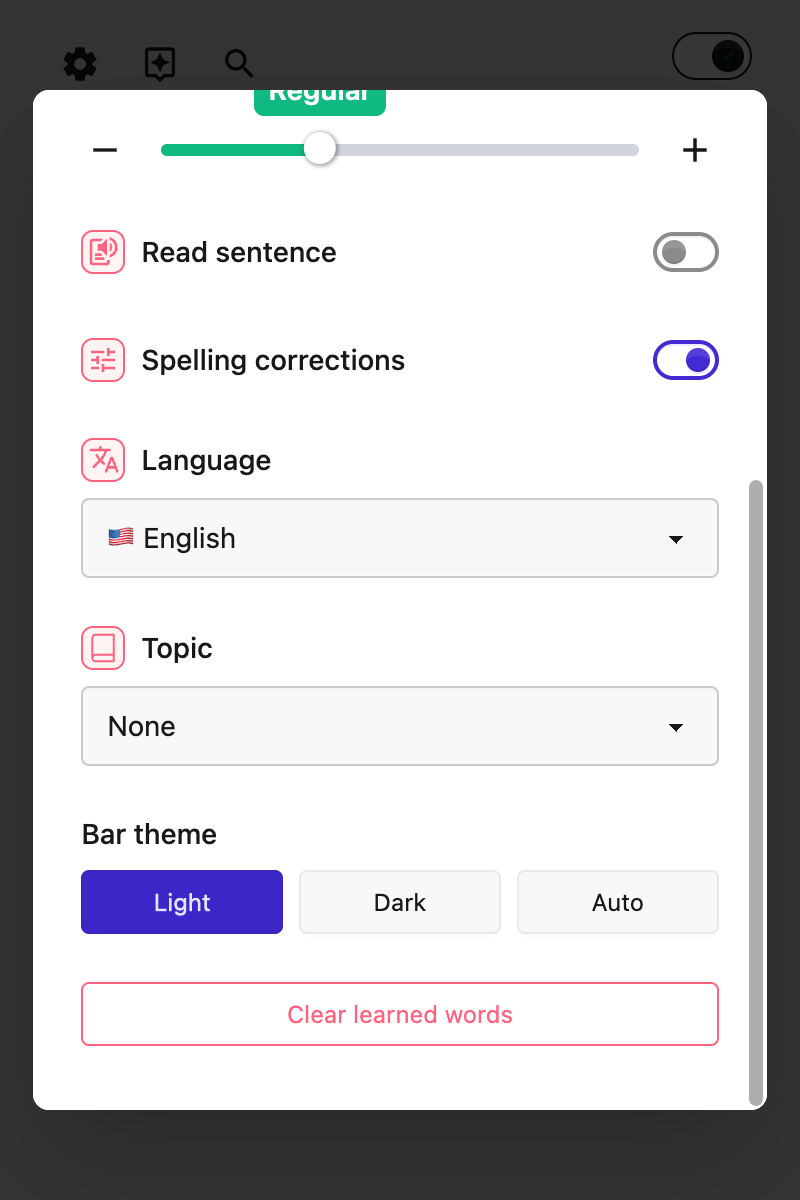
Suggestions – Use the slider or the - and + buttons to choose how many word suggestions appear as you type. You can choose between 2 and 8 suggestions.
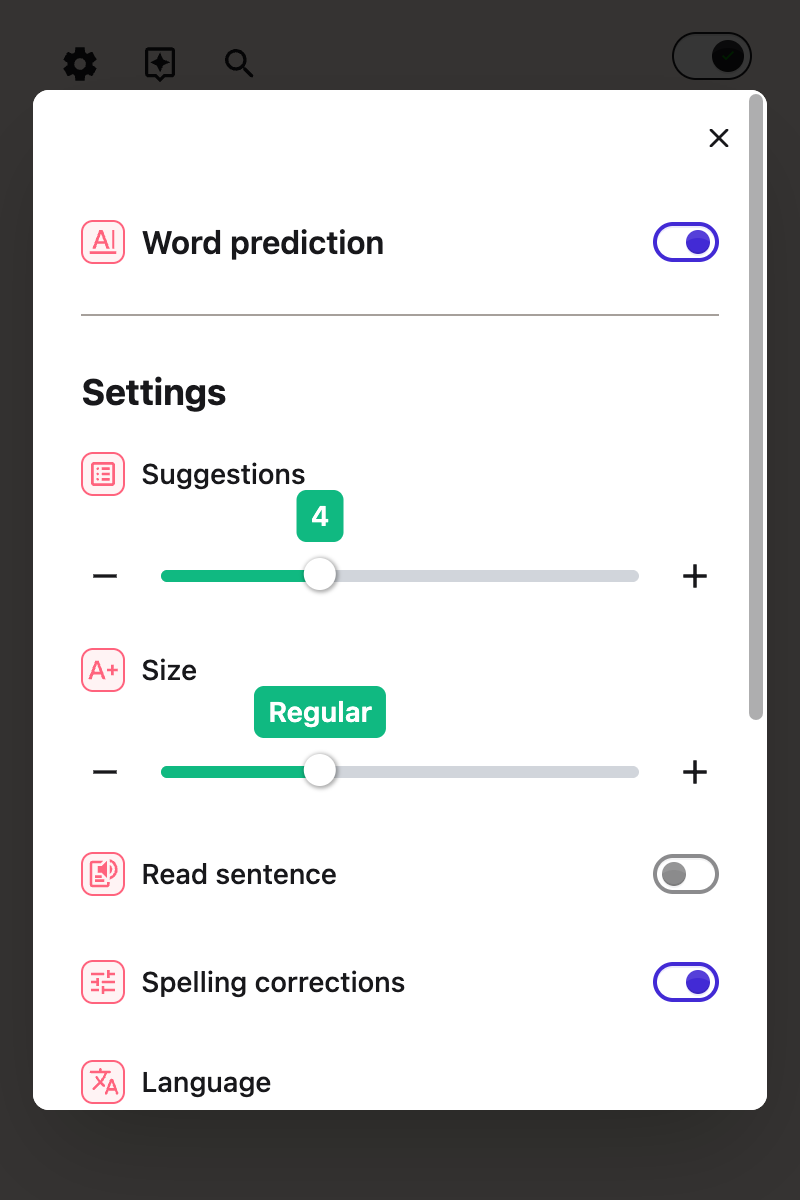
Size – Use the slider or the - and + buttons to change how big the whole suggestion bar appears. Choose between Small, Regular, Large, and Extra large. Bigger sizes can make suggestions easier to read at a glance.
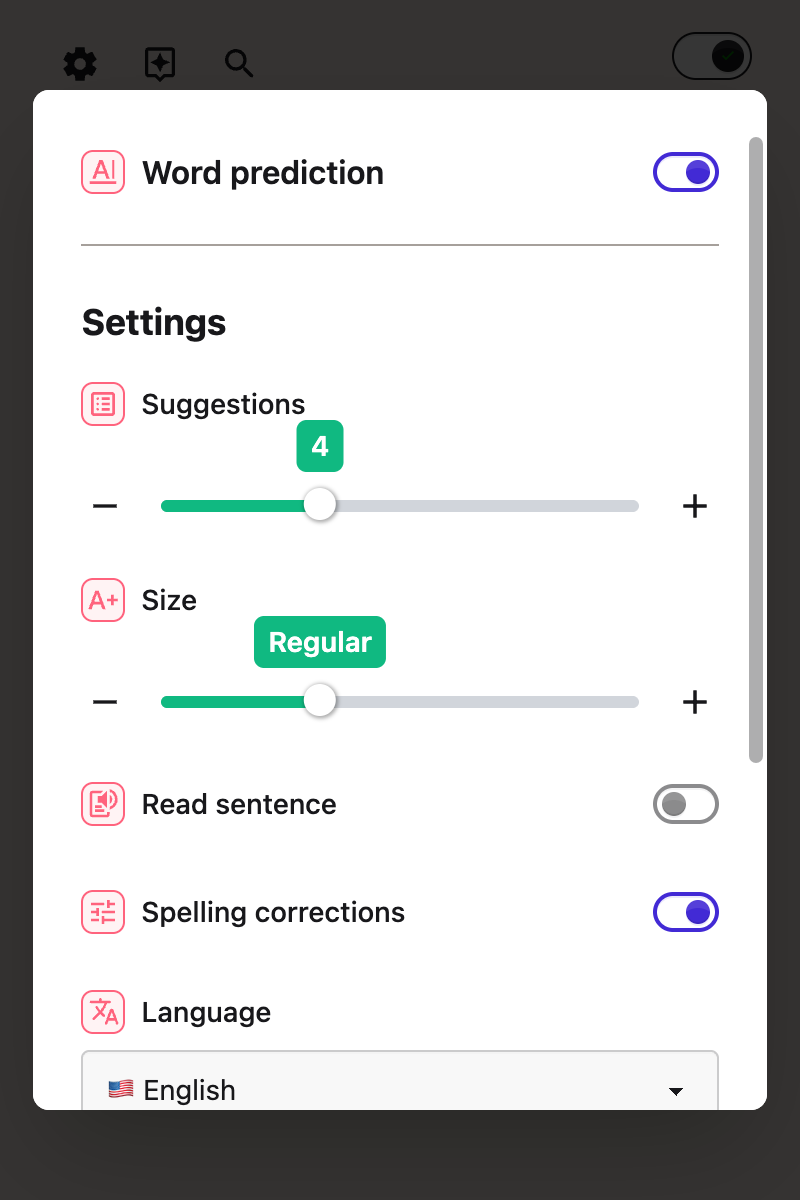
Read sentence – Turn this on to hear each sentence read aloud as soon as you finish it with a full stop, question mark, or exclamation point. Hearing your writing read back helps you catch mistakes and check that it says what you meant. This works on websites and in Google Docs, and it uses the same voice as your text to speech settings. This is a beta feature.
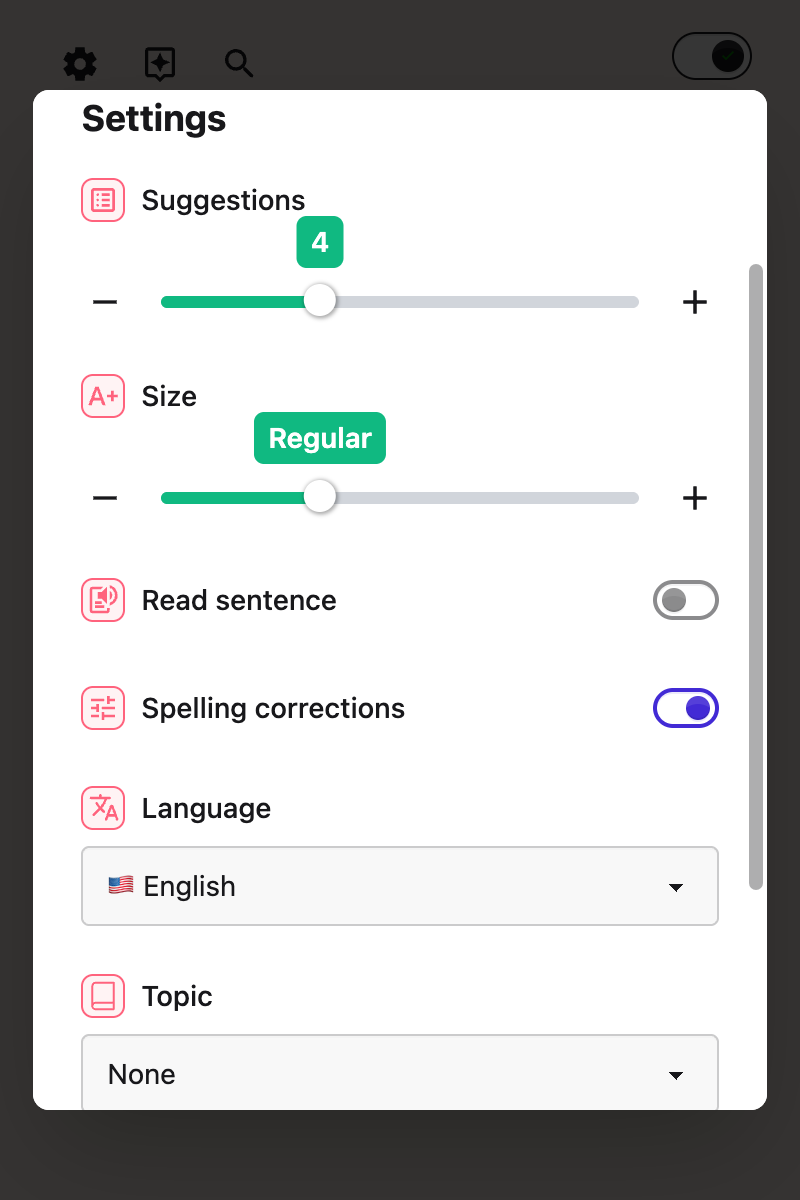
Spelling corrections – Suggested spelling fixes appear in the suggestion bar with a red style when a word looks misspelled. Turn this off if you would rather see predictions only.
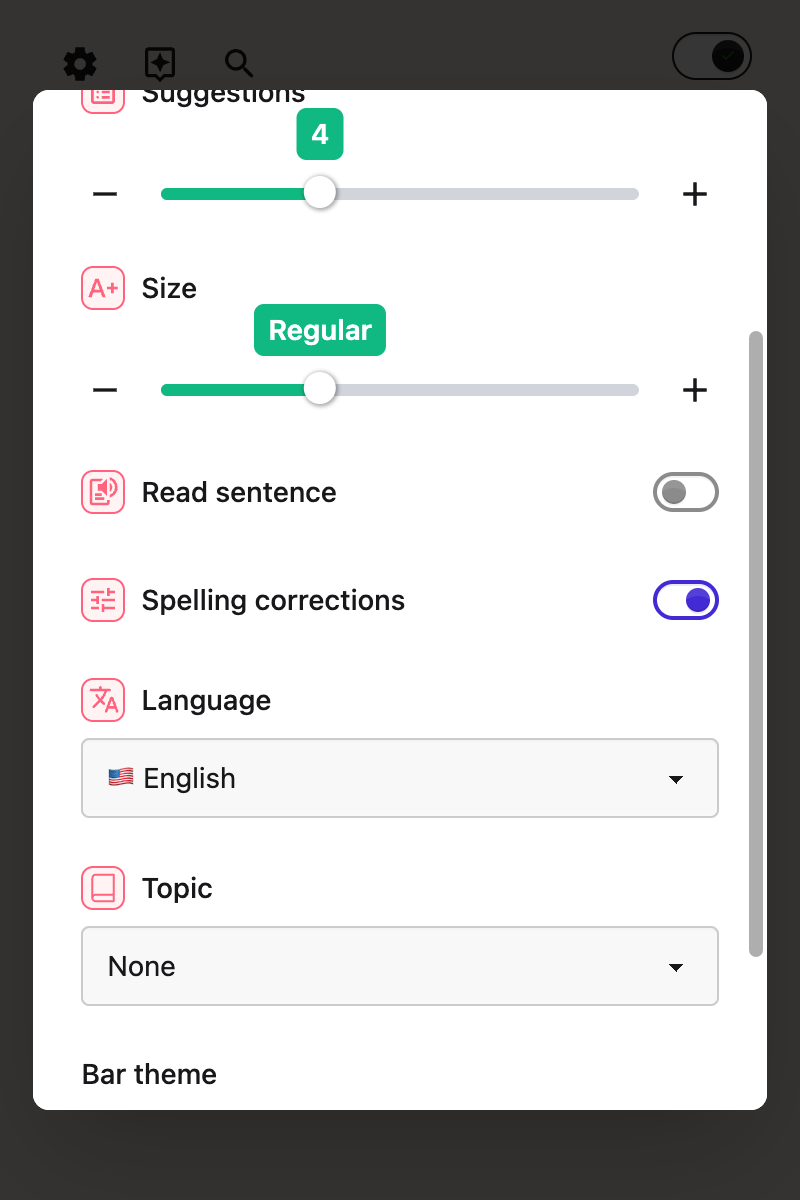
Language – Click on the language you will be typing in. Options include English, French, German, Spanish, and Portuguese. A green checkmark will appear next to your selected language.
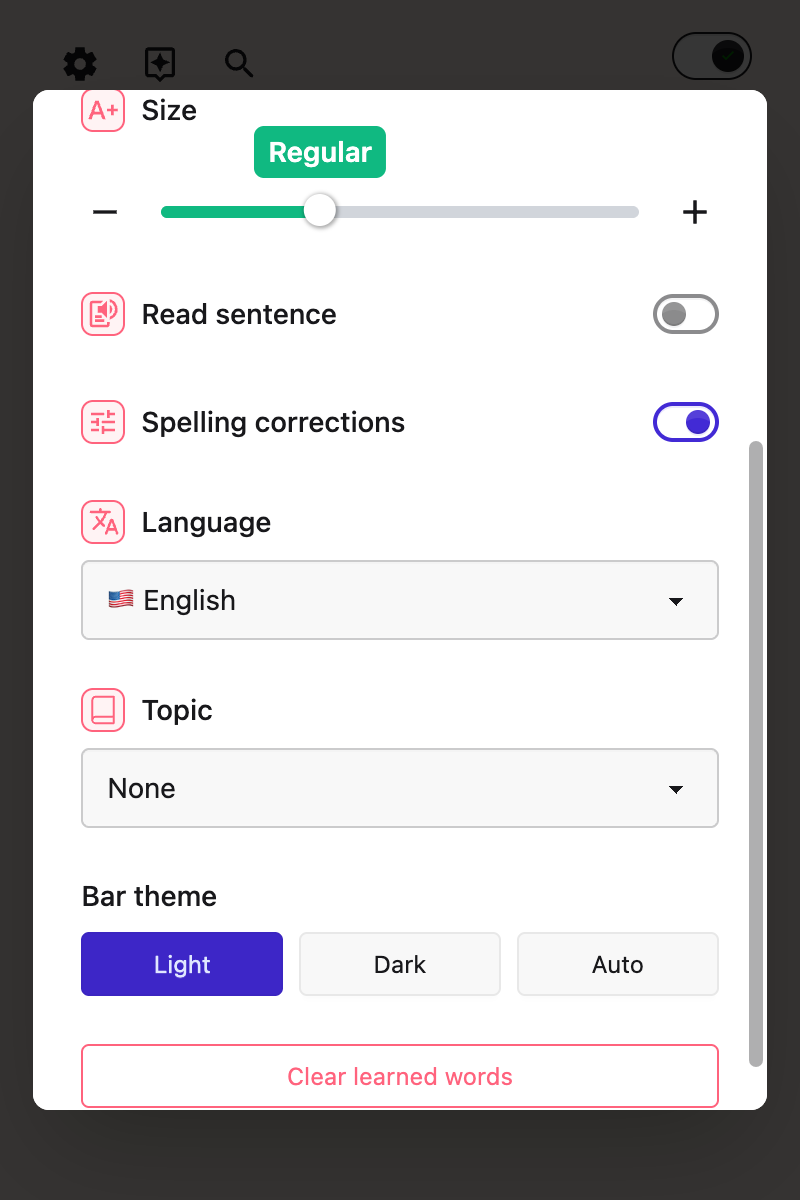
Topic – When your language is English, you can also pick a topic: This page, Science, History, Geography, Space, or Animals. This page builds the word list from the page you are on, so the suggestions match whatever you are reading. Helperbird then adds hundreds of subject words to your predictions, so words like "photosynthesis" or "archaeology" appear as you start typing them. Pick None to turn this off. Everything works offline, because the topic word lists are built into Helperbird. This is a beta feature.
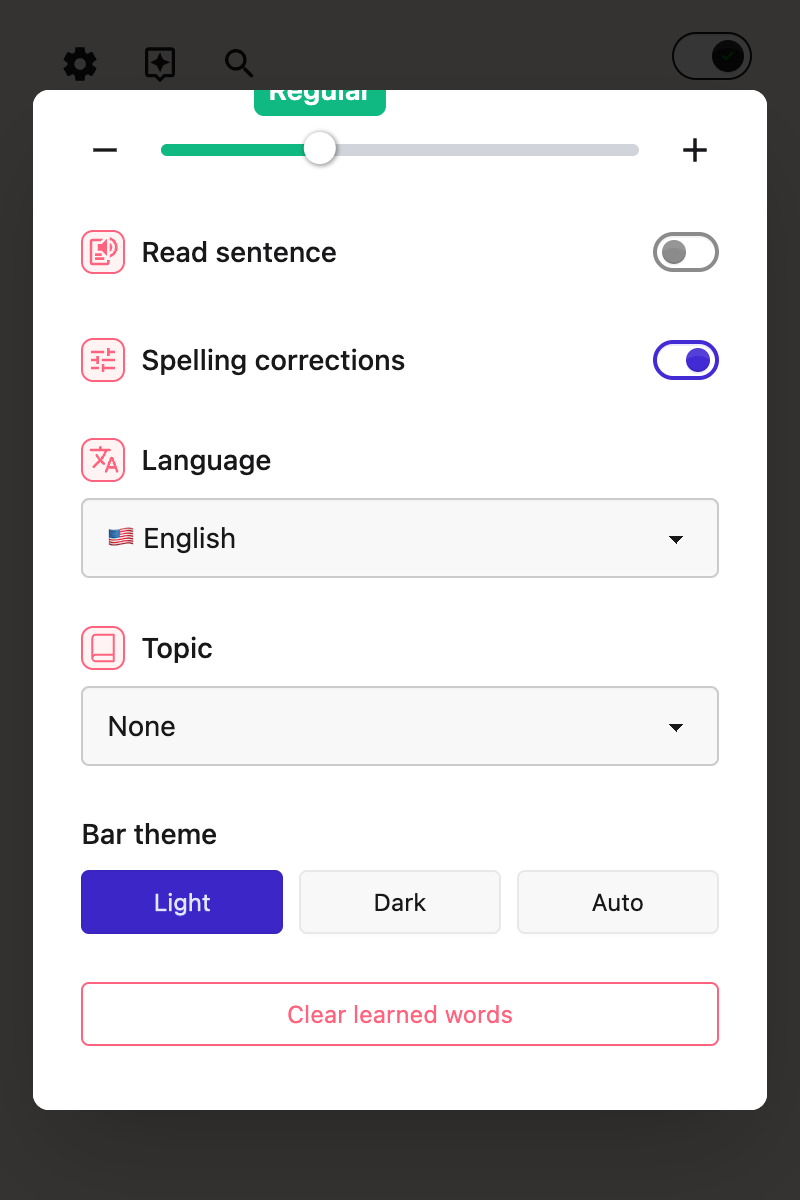
Bar theme – Choose how the suggestion bar looks: Light, Dark, or Auto. Auto follows whatever your browser is set to, so the bar matches the rest of your screen.
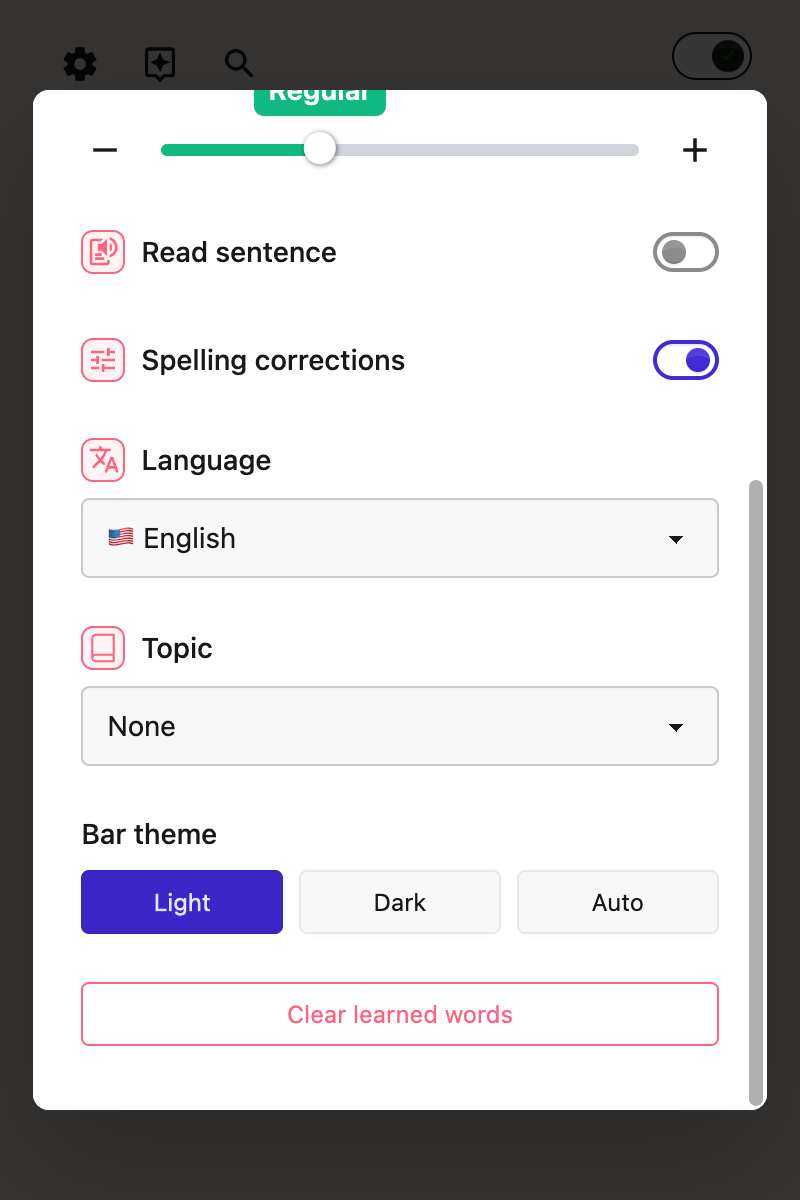
Clear learned words – Word prediction learns the words you use often so it can suggest them sooner. This button empties that list and starts it again. Useful if you have been typing something one-off, or if you are handing the computer to someone else.
Step 7: Start Typing
Now go to any text field on a website or in Google Docs and start typing.
A bar will appear showing word suggestions. The bar appears at the bottom centre of the screen by default, and you can drag it anywhere on the screen if you prefer a different spot. These are words that match what you have typed so far.
To use a suggestion:
- Click on any word to insert it into your text
- Click the speaker icon next to a word to hear how it is pronounced
You can also use the keyboard:
- Press Alt + Left Arrow or Alt + Right Arrow to move between suggestions
- Press Alt + Enter to insert the highlighted suggestion
- Press Escape to close the suggestion bar
The suggestions update as you continue typing.
The bar also includes a speaker icon next to each word so you can hear how it is pronounced before inserting it.
Word Prediction automatically learns from what you type. On Google Docs, it will also learn from the existing text in your document to provide better suggestions.
Helperbird can also detect and correct misspellings. If you type a misspelled word and press space, corrections may appear highlighted in the suggestion bar.
Tip: You do not need to finish typing a word. As soon as you see the word you want in the suggestions, just click it. This saves time and helps ensure correct spelling.
Video Tutorial
Need Additional Help?
If you have any questions or run into any issues, please contact the Helperbird support team. You can reach us at Helperbird support. We are happy to help you get the most out of Helperbird.